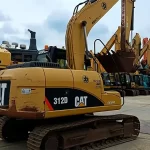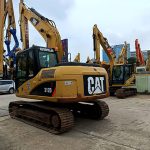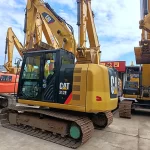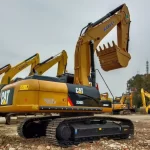
If you are in the market for a used compact excavator, or if you already own one, you know that the Caterpillar 312D holds a special place in the hearts of operators and contractors. It is the machine that perfectly bridges the gap between the nimble 308 and the heavy-lifting 320. For nearly a decade, the 312D (and its subsequent D2 series) has been the backbone of urban construction, road repair, and residential development projects across the globe.
However, buying a used 312D Excavator is a double-edged sword. On one hand, you are getting a proven workhorse with a robust hydraulic system and a fuel-efficient engine. On the other hand, these machines are aging. The newest D models are now over a decade old, and if you are looking at a pre-2012 model, you are dealing with a machine that has likely seen 10,000 to 15,000 hours of hard labor.
Buying used is smart—it saves you the massive depreciation hit of a new machine. But to keep your ROI healthy, you need to know how to maintain and repair these machines without relying on the dealer for every little hiccup. I’ve spent the last 15 years wrenching on yellow iron, and in this guide, I’m going to share the specific repair techniques, common failure points, and maintenance secrets that will keep your used Cat 312D swinging buckets and moving dirt for another 5,000 hours.
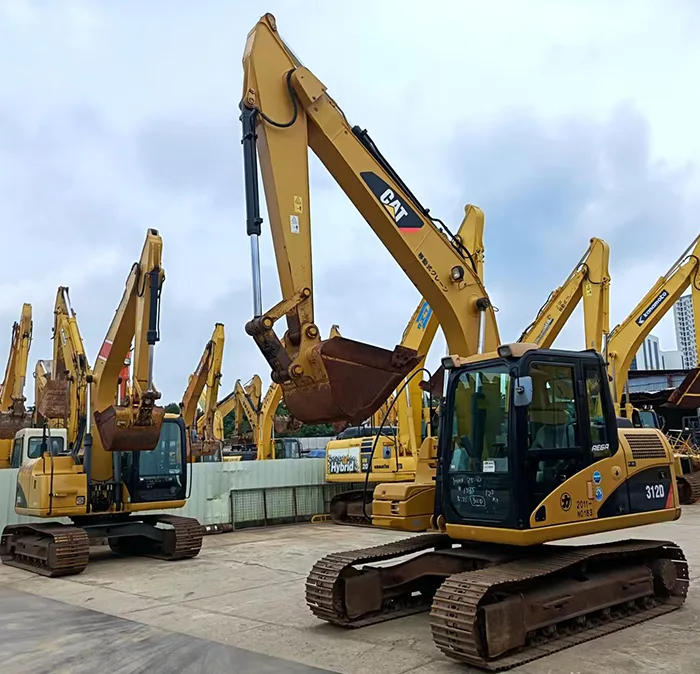
Why the Cat 312D Remains a High-Value Asset
Before we dive into the nitty-gritty of repairs, let’s talk about why the 312D is worth the effort. The “D” series represented a massive leap in technology from the C series. Caterpillar introduced the C4.2 engine (in the later D models) which, despite its emissions equipment, proved to be significantly more reliable than the previous generation’s fuel systems.
The 312D offers a perfect balance of power (roughly 90-100 horsepower) and transportability. You can move it with a tri-axle lowboy without needing a super-heavy haul permit in most states. For a used equipment buyer, this means high demand when you eventually decide to sell it. But a high resale value is contingent on one thing: condition.
If you are reading this because you just bought one at an auction, or you are struggling with a persistent hydraulic issue, you are in the right place. Let’s get into the shop.
Chapter 1: The Heart of the Beast – The C4.2 Engine
The majority ofused Caterpillar 312D excavators, specifically those manufactured after 2008, are equipped with the Cat C4.2 engine with ACERT technology. This is a 4-cylinder, 4.2-liter diesel that is generally bulletproof—if you treat the fuel system right.
1.1 Fuel System Contamination – The 1 Killer
In my shop, the number one reason a used 312D ends up needing a major engine overhaul is not wear and tear; it is fuel contamination. The common rail system on the C4.2 runs at pressures exceeding 23,000 psi. Injectors have tolerances measured in microns.
The Symptom: Hard starting, rough idle, loss of power under load, or a “surging” feeling while digging.
The Fix (Don’t Skip This):
If you just bought a used 312D, do not trust the fuel that came with it. Here is your maintenance protocol:
1. Drain and Inspect: Open the water separator at the bottom of the fuel filter housing. Let it drain into a glass jar. Look for black sludge (algae) or water. If you see water, you need to drain the entire tank.
2. Triple Filter Change: Replace the primary fuel filter (water separator) and the secondary fuel filter. Use only genuine Cat filters or high-quality aftermarket like Baldwin. Cheap filters collapse under the high pressure.
3. The “Suitcase” Test: If you suspect injector failure, do not just throw parts at it. The C4.2 injectors can be tested. Pull them and send them to a diesel shop. A single failing injector can take out the entire fuel pump due to “fuel dilution” in the oil. Check your engine oil dipstick—if it smells like diesel and is rising above the full mark, stop running the machine immediately.
1.2 The EGR and Cooler Headaches
Since the 312D falls into the Tier 3/Tier 4 interim emissions category, it has an Exhaust Gas Recirculation (EGR) system. In a used machine, the EGR cooler is a common failure point.
The Symptom: Coolant loss with no visible leak on the ground, white smoke from the exhaust, or the radiator bubbling.
The Repair:
Replacing the EGR cooler on a 312D is a tedious job because of the tight packaging in the engine bay. However, you can often extend the life of the system by performing an EGR valve cleaning every 1,000 hours. Remove the valve, use carb cleaner and a soft wire brush to remove the caked-on soot. If the cooler is leaking internally, you have two options: replace it with a new Cat unit (expensive) or go for an aftermarket upgrade that features a thicker core. Do not attempt to “delete” the EGR if you live in an area with strict emissions testing—it will cause inspection failures and potential fines.
1.3 The Alternator Belt Tensioner
This is a small repair that causes massive downtime. The serpentine belt tensioner on the C4.2 has a finite lifespan. On a used machine, it is likely original.
The Symptom: Squealing on startup, low voltage warnings, or the battery not charging.
The Repair:
The tensioner is spring-loaded. When it fails, it seizes. I recommend replacing the belt and tensioner as a set the moment you bring the machine home. It is a $200 part that, if it fails on a job site, can cost you $1,000 in lost productivity. Keep the old belt as a spare zip-tied inside the battery box.
Chapter 2: Hydraulics – Precision and Power
The hydraulic system on the Cat 312D is what makes it such a smooth operator. But when things go wrong in hydraulics, it gets expensive fast. Used machines often hide hydraulic issues with “thick oil” or additives. You need to see through that.
2.1 Pilot Filter Neglect
Most owners of used equipment are religious about changing the main hydraulic return filter. However, the pilot filter is often ignored. The pilot system runs at lower pressure (around 500-600 psi) but controls every movement of the joysticks.
The Symptom: Slow or jerky control lever response, intermittent “sticking” of functions, or the machine refusing to move.
The Repair:
The pilot filter is usually located near the hydraulic tank or under the cab. On the 312D, it is often a canister-style filter. Change this filter every other hydraulic oil change. I cannot tell you how many times I have “fixed” a slow 312D just by swapping out a clogged pilot filter. It is a $50 part that feels like a $5,000 repair.
2.2 Swing Bearing and Swing Gear – The Money Pit
If you are inspecting a used 312D, the swing bearing (slew ring) is the most expensive single component to replace. Replacing it requires splitting the machine, renting a crane, and usually costs $8,000 to $15,000 depending on the shop.
How to Assess:
Before buying, or during your ownership, perform the “grease test” and the “rock test.”
-Rock Test: Park on level ground. Extend the stick and bucket fully. Put the bucket on the ground and lift the tracks slightly off the ground. Swing the machine left and right. If you feel a “clunk” or a hard stop that isn’t smooth, the bearing has play.
-Grease Test: Check the swing bearing grease. If you see metal shavings (sparkles) in the old grease coming out of the weep hole, the internal race is wearing down.
Preventative Maintenance:
Do not over-grease the swing bearing. Greasing it every 10 hours is standard, but if you pump grease in until it blows out the top seal, you are forcing the seals open, letting dirt *in*. Give it 5-10 pumps during cold weather and 10-15 in hot weather. That is enough.
2.3 Hydraulic Cylinder Drift
On a used 312D, cylinder drift is common, especially on the boom and stick.
The Symptom: The bucket slowly curls down over 5 minutes, or the boom drops overnight.
Diagnosis:
You need to determine if it is the cylinder seals or the control valve.
1. Cylinder Test: Extend the cylinder fully. Disconnect the hose at the cylinder port (relieve pressure first!). If oil leaks out of the port while the cylinder is static, the piston seal is blown.
2. Valve Test: If the cylinder passes the above test, the issue is likely the main control valve (specifically the holding valve or the spool).
The Repair:
Rebuilding a cylinder on a 312D is straightforward but requires heavy lifting. Use a Cat OEM seal kit. Aftermarket kits are hit-or-miss; I’ve seen them fail within 200 hours on the stick cylinder due to the high side-load pressures. The stick cylinder takes the most abuse—do not cheap out here.
Chapter 3: Undercarriage – The Hidden Cost
When you buy a used excavator, the undercarriage is where you lose or make money. A 312D with 70% undercarriage is a gem; one with 20% is a money pit.
3.1 Track Adjuster Seals
The most common undercarriage repair on the 312D is the track adjuster. The grease cylinder that tightens the track eventually blows a seal.
The Symptom: The track keeps going slack even after you pump grease into the adjuster.
The Repair:
Do not just keep pumping grease into it. If the seal is blown, the grease is simply bypassing the piston and coming out the weep hole or into the recoil spring housing. You have two options:
-The Quick Fix: Replace the adjuster assembly. It is a sealed unit. This is the easiest for a mobile mechanic.
-The Rebuild: You can remove the adjuster, disassemble it, and replace the internal seals. However, getting the recoil spring compressed is dangerous. Unless you have a hydraulic press rated for 20+ tons and the safety cages, pay someone to do this.
3.2 Sprocket and Idler Wear
On a high-hour used machine, the sprockets will be sharp. If you let sprockets wear down to a point, they start chewing up the track chain links. If the chain links are worn thin, the track will snap.
Pro Tip:
When replacing sprockets on a 312D, always replace the track chains at the same time if the chain pitch is stretched. You can measure the pitch by laying a straight edge across 10 links. If the measurement exceeds the spec in the service manual by more than 5%, new sprockets will wear out in 500 hours because they are mismatched to the old chain. Buy the undercarriage as a “kit” (rollers, sprockets, chains) to get the best longevity.
Chapter 4: Electrical Gremlins – The Monitor Panel
The 312D introduced a more advanced monitor panel than its predecessors. While it’s great for diagnostics, these electronics age poorly in humid or dusty environments.
4.1 The “No Communication” Error
One of the most frustrating issues is when the machine starts, runs, but the monitor panel shows “No Communication” or the gauges go dead.
The Culprit: Usually, it is a CAN bus (Controller Area Network) issue or a failing display screen.
Troubleshooting:
1. Battery Terminals: Believe it or not, 70% of electrical issues on a used 312D are due to corroded battery terminals or a failing battery. The computers in these machines are extremely sensitive to voltage drops. Clean your terminals with a wire brush until they shine.
2. The Fuse Panel: There is a fuse panel behind the cab, near the floor. Water intrusion is common here if the cab seal is compromised. Check for green corrosion on the fuse blades.
3. The Screen: If the screen is cracked or delaminated (common in hot climates), you can send it out for refurbishment. Do not buy a cheap “non-OEM” replacement screen unless you are certain it is plug-and-play; some require dealer flashing to work.
4.2 Throttle Position Sensor (TPS) Failure
The throttle dial on the 312D is a digital potentiometer. It wears out.
The Symptom: Engine RPM fluctuates, won’t go to high idle, or shuts down when you move the dial.
The Fix:
Replacing the throttle dial is simple. Pop off the side console, unplug the harness, and swap the dial. However, calibration is key. After installing a new dial, you must enter the service menu (press and hold the “menu” button on the monitor while turning the key) and perform the throttle calibration. If you skip this, the machine won’t recognize the full range of motion.
Chapter 5: Structural Integrity – Cracks and Welds
Used excavators work hard. The 312D is a sturdy machine, but after 10,000 hours, metal fatigue sets in.
5.1 The Boom-to-Stick Connection
Inspect the stick (arm) where it connects to the boom. This is a high-stress pivot point. Cracks often start near the grease fitting bosses or along the weld seams.
The Repair:
If you find a crack, you cannot just run a bead of weld over it.
1. Stop Drill: Drill a small hole at the very end of the crack to prevent it from spreading further.
2. Grind: Use a grinder to create a “V” groove along the crack to ensure full penetration.
3. Preheat: If the crack is in a thick cast area, preheat the metal with a torch to 300-400 degrees Fahrenheit to prevent brittle welds.
4. Weld: Use 7018 rods or a hard wire welder with appropriate steel wire. Cool it slowly.
5. Reinforce: For structural cracks on the boom, weld a reinforcement plate over the repair. Do not just weld the crack and call it done; the area is now weaker than the surrounding metal.
5.2 Cab Mounts
On the 312D, the cab is mounted on rubber isolators to reduce vibration. On a used machine, these isolators collapse. If you feel excessive vibration in the cab, or if the door alignment is off (hard to close), check the mounts.
The Fix:
Replacing cab mounts requires supporting the cab with a jack or overhead hoist. It’s a two-person job. Ignoring this leads to stress cracks in the cab floor and premature failure of the air conditioner compressor due to misaligned belts.
Chapter 6: The Air Conditioning System – Keeping Cool
If you operate in the South, AC is non-negotiable. The 312D’s AC system is robust, but it fails often on used machines because of neglect.
6.1 The Evaporator Core
The evaporator core is located inside the cab, behind the seat. Over time, it collects dirt, mold, and debris. If your AC blows weak air or smells like a wet dog, the core is clogged.
The Repair:
Cleaning this is a pain. You have to remove the back panel, the seat, and sometimes the ducting. Once you have access, use a foaming evaporator cleaner. Do not just spray it in the vents—you need to clean the fins directly. If the core is leaking refrigerant, replacement is an all-day job. Plan for 6-8 hours of labor.
6.2 Condenser Fan Clutch
On the front of the radiator, there is a hydraulic fan (on some models) or an electric clutch. If your machine overheats and the AC blows hot at the same time, check the fan.
The Test:
With the machine running, look at the fan. It should be spinning at high speed when the hydraulic oil is hot. If it’s spinning slowly, the fan solenoid or the fan motor may be failing. On the 312D, a failing fan speed sensor will often trigger a “Hydraulic Oil Temperature High” warning before the engine actually overheats.
Chapter 7: Buying a Used 312D – A Pre-Purchase Checklist
Since this is a repair guide centered on used machines, I would be remiss if I didn’t give you a checklist for what to look for before you hand over the cash.
7.1 The Cold Start
If you show up to inspect a used 312D and the seller already has it running, be suspicious. You want to see acold start.
-White Smoke: A puff of white smoke on startup is normal for a diesel. If it continues for more than 10 seconds, you have injector or compression issues.
-Blue Smoke: This indicates burning oil. Likely worn piston rings or valve seals. Walk away unless you are prepared for a rebuild.
-Black Smoke: Black smoke under load is normal. Black smoke at idle is a fuel system issue.
7.2 The Hour Meter vs. The Wear
Used equipment is often victim to hour meter rollback or replacement. Never trust the meter alone.
– Check the pedal pads on the travel levers. If they are worn smooth, the machine has high hours regardless of what the meter says.
– Look at the bucket teeth and side cutters. If they are welded and re-welded, the owner was hard on the machine.
– Check the pins and bushings. Grab the bucket and stick and shake them violently. If you see vertical play of more than 1 inch, the pins and bushings are shot. Replacing all the pins and bushings on a 312D costs about $3,000 in parts alone.
7.3 Leaks
Look at the belly pan (the metal cover under the engine). If it is filled with oil, dirt, and grease, that is a “soft patch” hiding a major leak. A little weeping from the swing motor is normal; oil dripping from the belly pan drain plug is a red flag.
Chapter 8: Tooling and Diagnostic Essentials
To effectively repair a used Cat 312D at a shop level, you need the right tools. You can’t work on modern excavators with just a hammer and a set of wrenches anymore.
8.1 Caterpillar ET (Electronic Technician)
If you plan on keeping this machine for years, invest in a communication adapter (the Cat “Comm” adapter) and a laptop with Cat ET software. You can find used adapters online. This software allows you to:
– Read active and logged codes (not just the blinking light codes on the monitor).
– Perform calibrations (throttle, swing parking brake, hydraulic pressure settings).
– Monitor live data (fuel rail pressure, boost pressure, hydraulic pump angles).
8.2 The Track Press
If you are going to do undercarriage work, you need a hydraulic track press to remove and install master pins. Trying to do this with a sledgehammer on a 312D is a recipe for a broken thumb or a damaged track link. Rent one if you only do it once a year, or buy a portable unit if you run a fleet.
8.3 Pressure Gauges
A hydraulic pressure gauge set is non-negotiable. You need a set that reads up to 6,000 psi. You will use this to:
– Set the main relief valve pressure.
– Test pilot pressure.
– Diagnose weak functions (if the pressure is low, the pump is failing; if the pressure is high, there is a blockage).
Chapter 9: The Cost of Ownership – Planning Your Budget
Let’s talk money. If you are buying a used 312D, you need to set aside a repair budget. Assume the previous owner deferred maintenance.
Immediate Repairs (First 100 hours):
– Full fluids and filters (engine, hydraulics, swing drive, final drives): $800 – $1,200 (if doing it yourself).
– Track adjuster rebuild (if leaking): $300 – $500.
– Pin and bushing assessment: $0 (inspection) or $3,000+ (replacement).
Major Failure Budget:
– Hydraulic Pump Rebuild: $3,500 – $5,000 (if you remove it yourself, core charge applies).
– Swing Bearing Replacement: $8,000 – $12,000.
– C4.2 Engine Overhaul (In-frame): $10,000 – $15,000.
The goal of this repair guide is to help you avoid the major failures by catching the minor ones early.
Chapter 10: Extending the Life – Proactive Strategies
If you want your used 312D to be the machine that outlasts all your others, adopt these strategies.
10.1 The 500-Hour Service
Do not stretch the engine oil to 500 hours if you are using the machine in dusty conditions or heavy demolition. I change engine oil every 250 hours in a used machine. The C4.2 holds a lot of oil, but clean oil is the only thing preventing sludge buildup in the turbocharger lines.
10.2 Water in Fuel – Daily Habit
Make it a habit to drain the water separator *every morning* before you start the engine. It takes 30 seconds. A single cup of water in the fuel rail will destroy a $4,000 injection pump.
10.3 Grease is Cheap, Steel is Expensive
I am a broken record about this, but grease the 312D every 8 to 10 hours. Specifically:
-Bucket Linkage: These pins wear out the fastest. Grease them every 4 hours if you are digging in abrasive material like sand or caliche.
-Swing Bearing: As mentioned, use a metered approach.
-Final Drives: Check the oil level in the final drives weekly. A leaking final drive seal will lead to a $2,000 repair. A failed final drive (due to lack of oil) leads to a $6,000 replacement.
Conclusion: The 312D – A Worthy Investment
Repairing a used Caterpillar 312D is not just about fixing what is broken; it is about understanding the personality of the machine. It is a sophisticated piece of equipment that, when treated with respect, offers reliability that rivals machines that are five years newer.
The key takeaways from this guide are simple:
1. Fuel system first. Keep the C4.2 engine fed with clean fuel and genuine filters, or you will pay the price.
2. Hydraulics are expensive to diagnose but cheap to maintain. Change those pilot filters and keep an eye on cylinder drift.
3. Undercarriage is an investment. Monitor your track tension and replace sprockets with chains as a set.
4. Electronics require clean power. Keep your battery terminals spotless and dry.
Whether you are a first-time buyer looking at a used 312D at an auction, or a seasoned contractor trying to keep your fleet running without dealer intervention, the goal is the same: maximize uptime and minimize cost per hour.
I have seen these machines clock over 20,000 hours with nothing but routine maintenance and a few hydraulic hose replacements. I have also seen them become paperweights at 8,000 hours because an owner ignored a simple EGR cooler leak.
Take the time to inspect, repair proactively, and use the diagnostic tools available to you. The Cat 312D is one of the best compact excavators ever built. With the right care, it will continue to be a revenue-generating asset for your business for years to come.If you have a specific repair scenario you are dealing with—be it a track adjuster that won’t hold, a swing motor that is making noise, or a monitor panel that went dark—drop a comment below or reach out. The community of 312D owners is large, and chances are, someone has already figured out the exact fix you need.