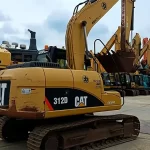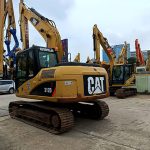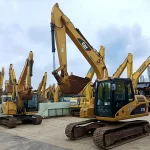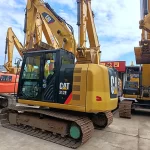
Second-Hand Caterpillar 336D Buyer’s Guide: Don’t Just Look at the Hour Meter – These 5 ‘Hidden Traps’ Can Save You a Down Payment on a House.
As excavator operators, we all have a soft spot for the “Yellow Iron.” For beginners, starting with a domestic or Korean machine is like learning to drive. But the ultimate goal for most is to get a Caterpillar. Not for any other reason – for the power and the resale value. Especially in mining or large earthmoving jobs, the Cat 336D is practically a “Thanos-level” beast.
Nowadays, a new machine costs easily one or two million (currency), and with slow payments on job sites, more and more savvy bosses are turning their attention to used Cat 336D excavators. These machines are tough, known as “hammer-ready” – but that refers to their new condition. In the second-hand market, the waters run deep.
Many newcomers see a machine with a fresh paint job, an hour meter showing only 5,000-6,000 hours, and a price that’s 100,000-200,000 lower than the market average. They get excited and buy it on impulse. Then, within two months of work, they’re either repairing the machine or on their way to the mechanic.
Today, I’m not going to discuss vague parameters. Let’s focus on this used Cat 336D and talk about the “invisible maintenance and repair traps” that sellers will never tell you.
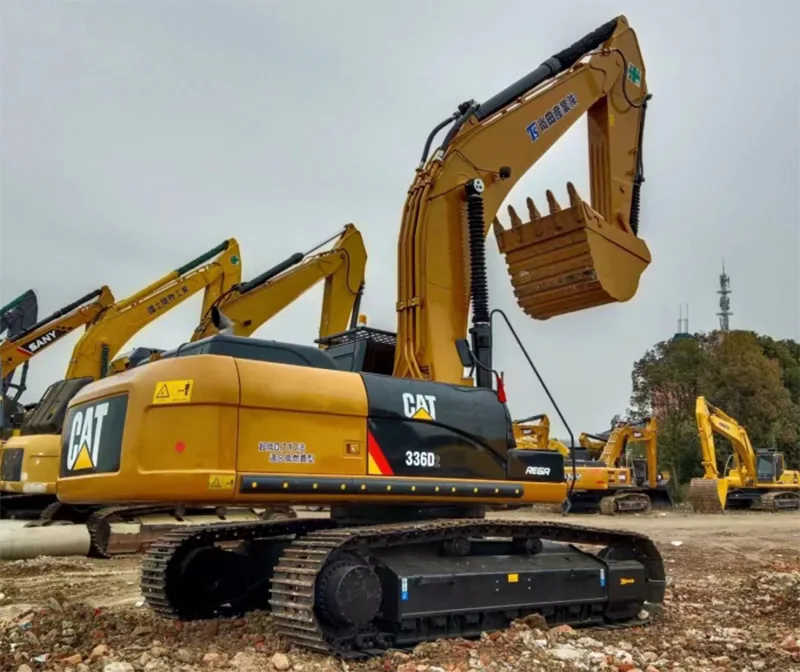
1. Don’t Fall for the “Shiny Paint” – First, Look Under the “Skirt” at the Undercarriage
Last week, a fan from Anhui called me, excited about a 2012 336D he’d just picked up at a great price. When I got there, the paint was gleaming, and the cab looked brand new. But when I crouched down to inspect the undercarriage, my heart sank.
Remember this, buddy: The undercarriage of a used Cat 336D is the first major trap.
This machine weighs nearly 50 tons, putting immense stress on the travel system. Many refurbished machines get a full repaint easily, but how much does a genuine set of “undercarriage components” (track rollers, carrier rollers, sprockets, idlers, and track shoes) cost? Tens of thousands!
That so-called “pristine” machine had track rollers leaking oil so badly they were black, track links worn to a “knife-edge,” and sprocket teeth ground down to nubs. If you buy a machine like that, it might handle light work for a couple of months, but if you take it to rock or use a breaker, it’ll be broken down in three days.
Maintenance Advice: When inspecting a used 336D, don’t rush to start it and listen to the engine. Bring a caliper and measure the height of the track links. New links are usually 8-10 cm high. If they’re below 6 cm, get ready to spend money. Also, lift the machine and spin the track rollers. If they don’t spin or are leaking oil – a genuine roller costs hundreds, an aftermarket one starts at 300, and there are dozens on the machine. That’s a huge hidden cost.
2. The “Black Box” of the Hydraulic Pump: High Flow Isn’t Skill; Stability Is
The Cat 336D is known as a “fuel guzzler.” Although it’s electronically injected, its hydraulic system is tuned very aggressively. In the second-hand market, many machines have their hydraulic pump flow turned up to look good during a test. How? By tightening the pump control valve screw! This makes the machine feel powerful and fast during a test drive.
But what you don’t know is that this is draining the life out of the engine and hydraulic pump.
A friend of mine who has repaired Cat pumps for 15 years told me that used Cat 336Ds have the highest repair rate for hydraulic pumps among all models. The previous owner was likely “rough” on it, running it at high load for long periods.
Maintenance Advice: After buying a used 336D, don’t put it straight to heavy work. First, find a professional technician to read the data with Cat ET (Electronic Technician) software. Focus on the hydraulic pump output pressure, pilot pressure, and flow difference between the front and rear pumps. If the flow difference exceeds the normal range, the machine definitely has issues with “valve stealing” or “walking deviation.”
If a used machine veers during a test drive, the seller might say, “No problem, just track tension differences.” Don’t believe it! For the 336D, walking deviation is rarely an undercarriage problem – it’s usually the hydraulic pump or the main control valve. Repairing the main valve, including labor and parts, can easily cost tens of thousands.
3. “Heart” Maintenance: The “Rich Man’s Disease” of High-Pressure Common Rail
The 336D is powered by the Cat C-series electronic engine. It’s a great engine, powerful, but it has two fatal weaknesses – fear of heat and fear of dirty fuel.
Many experienced 336D operators, upon buying a used machine, immediately remove the original fuel-water separator or replace it with cheap filters. Let me tell you, that’s playing with fire!
I saw a used 336D on a job site that, within a month of changing owners, started losing power, blowing black smoke, and limiting speed. The mechanic checked and found a stuck injector. Six injectors – a genuine replacement costs over 2,000 each, so over 10,000 for all six. The cause? Dirty fuel lines or high-water-content diesel.
Maintenance Advice: After getting a used 336D home, even if the previous owner says they just changed them, you *must* replace all the diesel filters and the fuel-water separator. Buy genuine Parker or Cat filters. Don’t try to save a few hundred – these are the engine’s “mask.” Also, regularly drain the water from the bottom of the fuel-water separator. The electronic 336D is more sensitive to water than your wife checking your phone – let one drop of water in, and it will break down on you.
4. Electrical System: The “Time Bomb” Hidden in the Armrest
Many used 336Ds on the market now are electronically controlled models with displays. Electrical problems are a major headache for many experienced operators.
A member on the Tieba forum shared a case where his machine suddenly had unstable throttle – RPMs fluctuating randomly, unable to work. He called a so-called “electrical expert” who, after checking for a long time, replaced the throttle motor, costing over 3,000, but the problem remained. Eventually, they found worn wiring in the right armrest – some wire insulation had broken, causing a short to ground.
Such a small problem, but without expertise, you could waste tens of thousands of yuan.
Maintenance Advice: After buying a used machine, take some time yourself to remove the cab seat and open the armrest. Rewrap all the wiring harnesses inside with electrical tape. For wires contacting metal frames, add a rubber pad or secure them with zip ties. This machine has been bouncing around job sites for years – the wire insulation is definitely aged.
Also, many used 336D displays might show fault codes like “523” or “113.” The seller might say, “It’s a minor issue, just clear it.” Be cautious – it could be a sensor failure, a wiring short, or even a problem with the ECM (computer board). The ECM is not cheap – a used one costs several thousand.
5. Breaker-Used Machines: The “Truth-Revealing Mirror” for Used 336Ds
In the used market, 8 out of 10 336Ds have run a hydraulic breaker. While the 336D chassis is tough, the damage from breaker vibration to the hydraulic system is irreversible.
How to spot a “breaker machine”:
1. Check the pump compartment: Breaker machines often have metal shavings mixed into the hydraulic oil, leading to abnormal wear or signs of disassembly/repair on the hydraulic pump surface.
2. Check the return filter: If you can test the machine, pull out the return filter after working it. If you see copper or iron particles on the filter screen, the machine is “terminally ill.” Copper particles mean the pump is wearing; iron particles mean cylinders or valve bodies are wearing. Buying such a machine means future pump replacements or valve grinding – repair costs that will drown you.
3. Check the boom and arm: Carefully inspect the welds on the boom and arm. Breaker machines, due to intense vibration, often have cracks and re-welds on the arm’s reinforcement ribs. Even the pins at the boom foot may show excessive wear and play.
6. Ultimate Money-Saving Tip: The “Golden 250 Hours” of Maintenance
If you’ve already bought a used 336D, or are planning to, remember this number: 250 hours.
Caterpillar’s official guidelines mention 250 hours as a key service interval. But for a used machine, shorten that to 200 hours.
Because the engine clearances on a used machine are already larger, and the oil gets dirty faster than on a new machine.
Mandatory tasks:
– Engine oil and filter: Don’t use cheap CF-grade oil. Feed your 336D CI-grade or higher diesel engine oil, and it will work hard for you.
– Swing bearing grease: Many operators forget to grease the swing bearing. If you hear a “clunking” noise when swinging, the balls inside may be worn or dry. Replacing a swing bearing, including parts and labor, costs tens of thousands.
– Final drive gear oil: Check the gear oil in the travel motor. On many used 336Ds, the travel motor seals are aged, allowing gear oil to leak into the gearbox or water to emulsify it. If not changed promptly, the internal bearings can break. You’ll hear “clicking” when traveling. Repairing a travel motor is even more troublesome than repairing a hydraulic pump.
Final Words
So, can you buy a used Caterpillar 336D? My answer is: Yes, absolutely – but buy it smart.
This machine is like a seasoned veteran – covered in scars, but if the foundation is solid, the undercarriage is still tough, and the engine skeleton is intact, it’s a money-making machine on the job site.
Don’t be tempted by incredibly cheap deals – those are often “sickly” machines. You’ll spend more time repairing them than working, and the lost income from downtime will far outweigh any savings on the purchase price.
After buying one, treat it like your own child – inspect it frequently, use good quality oils and lubricants, and grease it generously. Don’t mistreat it just because it’s used. If you treat it like a beast of burden, it will leave you stranded. If you treat it like a brother, it will help you earn enough to buy a brand new machine.I’ll leave you with this: For a used Cat 336D, don’t fear a higher price – fear a broken machine. Don’t fear age – fear neglect. Know your work, know your machine – that’s a true experienced operator.